Home › Healthy Lifestyle & Preventive Care
Healthy Lifestyle & Preventive CareComplete Gym Workout Plan for Beginners
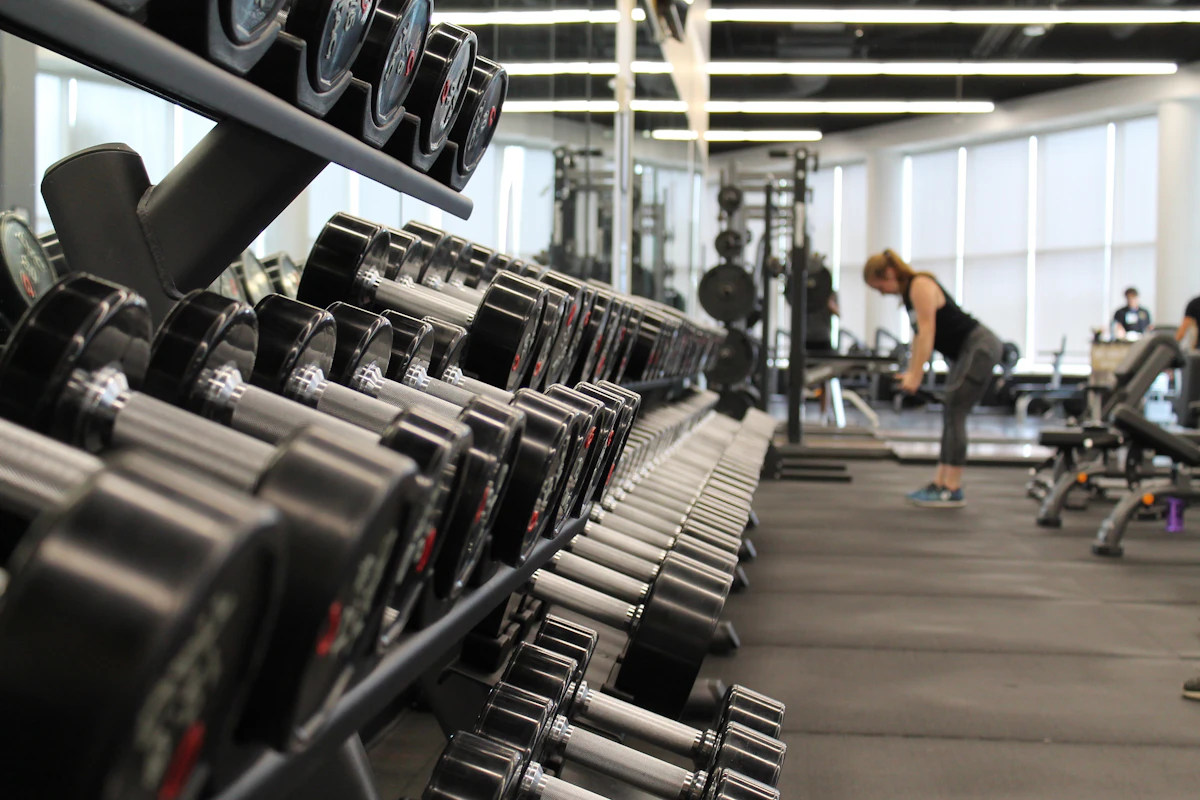
Walking into a gym for the first time can feel like arriving at a party where everyone already knows the rules. Rows of machines, racks of heavy metal and people who seem to know exactly what they are doing make many newcomers turn around at the door. A clear gym workout plan for beginners removes that uncertainty: you arrive knowing which machine to use first, how many sets to do and when to go home.
This guide walks you through the whole process. You will learn what to pack and how gym etiquette works, how machines differ from free weights, how to warm up, and a three-day full-body routine with sets, reps and rest times. You will also find advice on choosing starting weights, a six-week progression table, two worked examples, common mistakes, safety guidance and answers to frequent questions.
Your First Gym Visit: Preparation and Etiquette
Most of the nerves disappear once you have a plan, so do a little preparation before you go. Book an induction if your gym offers one; many do so for free, and staff will show you how to adjust each machine. Visit during a quiet period, usually mid-morning or early afternoon, so you can learn without queues.
What to bring
- Flat, supportive shoes. Cushioned running shoes are fine; avoid sandals and open footwear.
- A small towel to wipe equipment and your hands.
- A water bottle you can refill.
- A notebook or phone app to record every exercise, weight and rep.
- A lock if you plan to use a locker.
Etiquette that keeps everyone comfortable
- Wipe down benches and machine pads after you use them.
- Return dumbbells and plates to their racks. This is the single most common complaint among regulars.
- Do not sit on a machine scrolling your phone between sets while others wait. Ask people "Are you using this?" politely, and offer to let them "work in" if they ask.
- Give people space in front of mirrors and avoid walking through someone's lifting area.
- Ask staff if you are unsure. Everyone was a beginner once, and most people are happy to help.
Machines Versus Free Weights
Gyms are generally split into machines, free weights (dumbbells, barbells and kettlebells) and cardio equipment. Beginners often wonder which to start with, and the honest answer is a mix of both, leaning on machines at first.
Why machines suit week one
Machines guide the movement along a fixed path, so you can focus on pushing or pulling without worrying about balance. Most have a diagram and a pin to choose the weight, which makes changes quick and safe. They are excellent for learning how a muscle should feel when it works.
Why free weights matter
Dumbbells and barbells make you control the weight in every direction. This recruits more stabilizing muscles and tends to carry over better to daily life, such as lifting a suitcase or picking up a child. The trade-off is a steeper learning curve, so begin with light dumbbells before touching a barbell.
| Feature | Machines | Free weights |
|---|---|---|
| Learning curve | Low | Moderate |
| Balance demand | Minimal | Higher |
| Weight changes | Move a pin | Swap dumbbells or plates |
| Range of exercises | Limited to each machine | Very wide |
| Best for | Weeks 1 to 4, isolating muscles | Building coordination and function |
Warm-Up: Eight Minutes That Matter
Gym workouts load your joints more heavily than most daily activity, so spend a few minutes preparing before every session. Warming up raises your body temperature and rehearses the movements you are about to perform.
- Easy cardio for 4 minutes on a bike, rower or treadmill. You should breathe a little harder but still be able to talk.
- Arm circles and shoulder rolls, 10 each way.
- Bodyweight squats, 10 slow reps.
- Hip hinges (good mornings with no weight), 10 reps.
- Warm-up sets of your first exercise: one set of 8 reps with a very light weight before the working sets begin.
Do not stretch cold muscles hard. Gentle movement is enough before training, and longer stretches can wait until afterward if you enjoy them.
The 3-Day Full-Body Plan
Train on Monday, Wednesday and Friday, which leaves a rest day between sessions. Every workout hits the whole body, so missing a day does not leave you with an untrained muscle group. This gym workout plan for beginners runs roughly 45 to 55 minutes per session including the warm-up. Workout A and Workout B alternate, so you perform A, B, A in week one, then B, A, B in week two.
Workout A (Monday, and Friday in odd weeks)
| Exercise | Sets | Reps | Rest |
|---|---|---|---|
| Leg press machine | 3 | 10 to 12 | 90 seconds |
| Dumbbell bench press (or chest press machine) | 3 | 8 to 10 | 90 seconds |
| Seated cable row | 3 | 10 to 12 | 75 seconds |
| Dumbbell shoulder press (seated) | 2 | 8 to 10 | 75 seconds |
| Lying leg curl machine | 2 | 10 to 12 | 60 seconds |
| Plank | 2 | 20 to 30 seconds | 45 seconds |
Workout B (Wednesday, and Friday in even weeks)
| Exercise | Sets | Reps | Rest |
|---|---|---|---|
| Goblet squat (one dumbbell) | 3 | 8 to 10 | 90 seconds |
| Lat pulldown | 3 | 10 to 12 | 90 seconds |
| Incline push-up or machine chest press | 3 | 8 to 12 | 75 seconds |
| Dumbbell Romanian deadlift | 3 | 8 to 10 | 90 seconds |
| Dumbbell biceps curl | 2 | 10 to 12 | 60 seconds |
| Cable triceps pushdown | 2 | 10 to 12 | 60 seconds |
Form cues for the key lifts
- Leg press: Keep your lower back and hips against the pad, push through your whole foot and stop just before your knees lock out.
- Goblet squat: Hold one dumbbell against your chest, keep your chest tall and sit down between your knees.
- Lat pulldown: Lean back slightly, pull the bar to upper chest level by driving your elbows down, and avoid yanking with momentum.
- Seated cable row: Sit tall, pull your elbows back and squeeze your shoulder blades without leaning far behind your hips.
- Romanian deadlift: Push your hips back with soft knees, slide the dumbbells down your thighs and stop when you feel a stretch in the back of your legs.
Finish each session with 10 to 15 minutes of easy cardio if you have the energy, or a short walk. If you want more detail on movement patterns, our guide to strength training basics explains them clearly.
Choosing Starting Weights With RPE
The most common question is "How heavy should I go?" Instead of guessing a number, use RPE, short for rating of perceived exertion. It is a 1 to 10 scale where 10 means you could not do another rep. For beginners, the target is about RPE 7 to 8, which is the same as leaving two reps in reserve. That means that when you finish a set, you feel you could have completed two more good reps.
A simple method to find your weight
- Pick a weight you are confident is too light and do 10 reps.
- Rest a minute and raise the weight slightly, then repeat.
- Stop increasing when the last two reps of a set feel hard but your form stays clean.
- Write that weight down. It is your starting weight.
In the first two weeks, err on the light side. Your muscles will adapt faster than your tendons and joints, and the first fortnight is mostly about learning technique and building a habit. Finishing a session feeling you did a good job, rather than flattened, is the right signal.
Tip: If your form breaks down, such as your back rounding or your knees collapsing inward, the weight is too heavy for now. Drop it by 10 percent and continue.
Progressive Overload: A Six-Week Table
Progressive overload simply means giving your body a slightly bigger challenge over time. You can do this by adding reps, adding weight, adding a set or slowing the lowering phase. The table below uses a double progression approach: first increase reps within the range, then increase the weight and return to the lower end.
| Week | Sets per exercise | Target | Effort (RPE) |
|---|---|---|---|
| 1 | 2 | 8 to 10 reps, light weights, learn the machines | 6 to 7 |
| 2 | 2 to 3 | Same weights, aim for the top of the rep range | 7 |
| 3 | 3 | Add a third set to the main lifts | 7 to 8 |
| 4 | 3 | Increase weight by the smallest step when you hit the top reps | 7 to 8 |
| 5 | 3 | Keep new weights and build reps again | 8 |
| 6 | 2 to 3 | Lighter "deload" week: reduce sets or weight by about 20 percent | 6 to 7 |
Small jumps work best. On dumbbells that might be 1 to 2 kilograms; on a cable stack, one plate. After the deload, begin the cycle again with slightly higher starting weights. Recovery matters as much as effort, so see our muscle recovery guide for sleep and rest tips.
Two Beginners, Two Different Starts
The same plan can look different depending on the person. Consider two examples.
Maya, 28, desk worker, never lifted. Maya begins with two sets per exercise for the first two weeks and uses machines for most lifts. Her leg press starts at a modest plate load, and she swaps the dumbbell bench press for the chest press machine until she feels confident. She trains at 7 a.m. before work, finishes in 45 minutes and keeps Tuesday and Thursday for walking. By week four she is using three sets on the main lifts and has moved to dumbbells for pressing.
Tom, 45, active but new to lifting. Tom plays weekend football and walks daily, so his heart and lungs cope easily, but his shoulders feel tight and his knees are sensitive. He keeps the leg press lighter, uses a box to limit squat depth and chooses a neutral-grip dumbbell press, which feels kinder to his shoulders. He spends extra time warming up his hips and shoulders. Tom adds weight more slowly than Maya, and that is perfectly fine, because the plan works through consistency rather than speed.
The principle is the same for both: choose exercise variations that feel good, begin with weights you can control and increase only when each set feels solid.
Common Beginner Mistakes
- Copying an advanced program. Five-day splits and heavy singles are built for experienced lifters. Full-body sessions three times a week work well when you are new.
- Ego lifting. Loading more weight than you can control invites strain and teaches poor habits.
- Skipping legs. Your legs and hips are your largest muscles. Training them matters for strength and daily movement.
- Rushing rest periods. Short rests leave you too tired to lift well on the next set.
- Changing the plan every week. You need to repeat exercises to improve at them. Stick with one routine for at least six weeks.
- Holding your breath. Breathe out during the effort and in as you lower.
- Neglecting food and sleep. Regular meals with enough protein and seven or more hours of sleep help your body adapt. Our protein guide covers the basics.
Safety, Soreness and When to See a Doctor
Feeling a dull ache in your muscles a day or two after your first sessions is normal. It usually fades within three days and becomes less noticeable as you adapt. Light walking, hydration and sleep help.
Warning signs are different. Sharp or sudden pain, pain in a joint rather than a muscle, numbness, tingling, dizziness, chest pressure or unusual breathlessness all mean you should stop and get checked. Never push through them.
- Set machines up properly: adjust seat height so the joints line up with the pivot point.
- Use the safety pins or catches on any rack, and ask a staff member to show you how.
- Ask for a spotter on heavier pressing, or choose dumbbells that you can safely put down.
- Stop a set when form fails, not when the number is reached.
Please note: This article is general education, not personal medical advice. If you have a heart condition, high blood pressure, diabetes, joint problems, an injury, are pregnant or have not exercised for a long time, speak with a doctor or qualified professional before starting a new program.
Tracking Your Progress
A simple log is the most powerful tool in the gym. After each exercise, write the weight, sets and reps, plus a quick note on effort. Next session you will know exactly what to beat, which removes guesswork and builds confidence.
Look beyond the scale. Useful measures include the weights you lift, the number of sessions completed, how you feel on stairs, your energy through the day and the quality of your sleep. Take a photo or measurement once a month if you like, but treat it as one data point rather than a verdict.
Any gym workout plan for beginners works best when your goals are ones you control, such as "attend 18 sessions in six weeks." After the six-week deload, review your notes, repeat what worked and choose one small change, such as adding a new exercise or a few more minutes of walking.
Frequently Asked Questions
How many days a week should a beginner go to the gym?
For most people, a gym workout plan for beginners should use three days of full-body training with a rest day between is a reliable starting point. Two days is still worthwhile if your schedule is tight, and you can add light walking on off days.
How long should each gym session last?
Aim for 45 to 60 minutes including the warm-up. Shorter sessions work too. Consistency matters more than length.
Should I do cardio before or after weights?
Use a short, easy cardio piece to warm up, then lift, and do longer cardio afterward or on separate days. That keeps your energy available for the lifts that need good technique.
Do I need a personal trainer?
No, but one or two sessions can help you check your form and learn the equipment. Many gyms include an induction in the membership.
What if the machine or weight I want is taken?
Swap the order of your exercises or use a similar alternative, such as dumbbells instead of a machine. Flexibility keeps your workout moving without stress.
When will I start to notice changes?
Most beginners notice improved strength and confidence within the first few weeks, since the nervous system learns movements quickly. Visible body changes take longer and vary from person to person, so focus on the habits you control.